Breaking Barriers: Lack of Affordable OTC Health Treatments for Young Women’s 3 Most Common Bacterial Infections
1. Research Focus and Purpose
This project examines the lack of affordable and accessible over the counter (OTC) treatments for the three most common bacterial infections affecting young women: urinary tract infections (UTIs), bacterial vaginosis (BV), and yeast infections. Centered on women ages 15–30, particularly college students and individuals from lower-income or underserved communities, the research highlights how stigma, misinformation, and cost barriers prevent timely care. The goal of this study was to raise awareness within public health and healthcare systems while reframing vaginal health as a normal and essential component of overall well-being rather than a taboo topic.
2. Key Findings & Scientific Skills
Using a mixed-methods approach, this study combined literature review, survey data, and interviews with healthcare professionals and affected individuals. Survey results revealed that stigma and lack of education were the most significant barriers to accessing OTC care, with many respondents reporting confusion between infections, delayed treatment, or reliance on ineffective home remedies. Cost was also a major obstacle, as many OTC products are expensive and not covered by insurance. The findings emphasize that limited access and poor health literacy contribute to untreated or recurring infections, reinforcing existing health inequities.


3. Public Health & Pre-Health Relevance
This research demonstrates my interest in health equity, patient education, and preventive care, all of which are critical to my pre-dental and healthcare journey. By analyzing how systemic barriers affect access to basic treatment, this project strengthened my understanding of how social determinants of health shape patient outcomes. It also reflects my ability to conduct independent research, analyze real-world data, and connect biological health issues to policy, education, and clinical practice skills that are directly relevant to future work in dentistry and patient centered care.
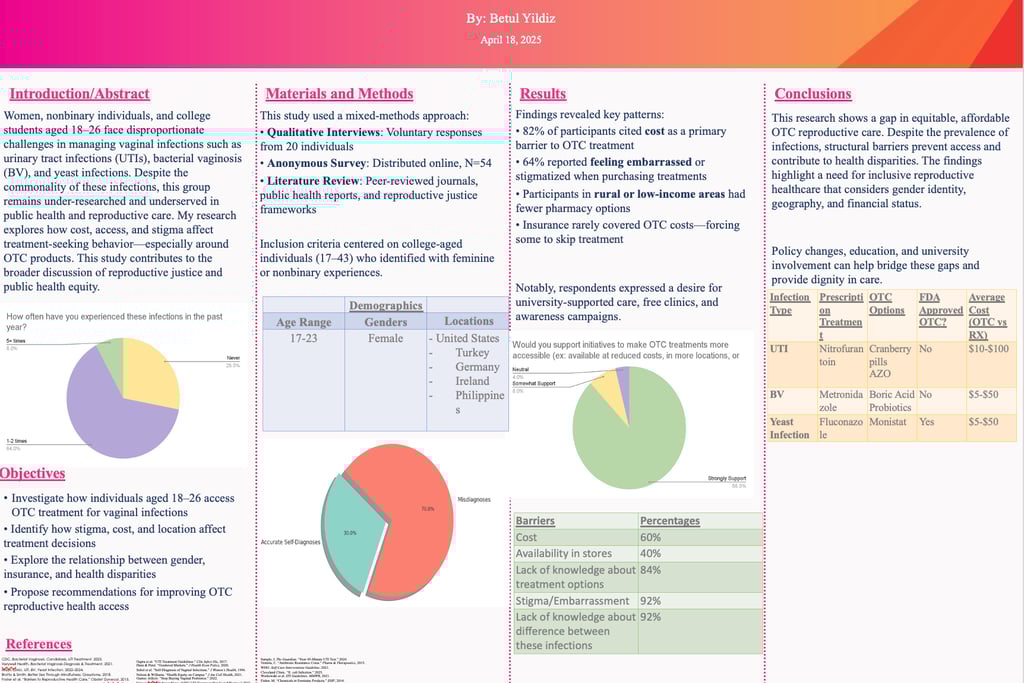
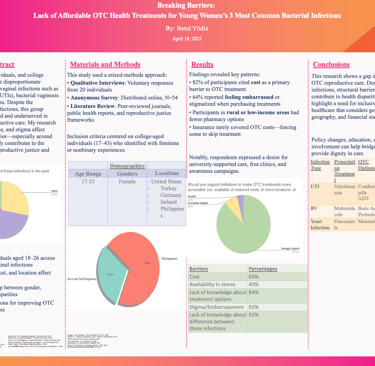
I presented this research poster at Douglass Women’s College, where I shared findings from my study on the lack of affordable and accessible over-the-counter (OTC) treatments for common vaginal infections, including UTIs, bacterial vaginosis, and yeast infections, among women, nonbinary individuals, and college students ages 18–26. The poster highlighted how cost, stigma, insurance gaps, and geographic access influence treatment-seeking behavior, emphasizing that these infections are common yet often under-addressed in public health and campus healthcare settings.
During the presentation, I discussed my mixed-methods approach, which included anonymous surveys, qualitative interviews, and an extensive literature review. I walked attendees through key results showing that many students delay or avoid treatment due to embarrassment, confusion between infections, or the financial burden of OTC products. Audience members engaged in conversations about reproductive health equity, university-based interventions, and the role of education in reducing stigma.
Presenting at Douglass allowed me to translate academic research into accessible, community-focused dialogue, strengthening my ability to communicate public health issues to diverse audiences while advocating for equity-driven, student-centered healthcare solutions.