Breaking Barriers: Lack of Affordable OTC Health Treatments for Young Women’s 3 Most Common Bacterial Infections
1. Research Focus and Purpose
This project explores the critical role of written communication in dentistry, emphasizing how accurate documentation supports patient safety, ethical care, and legal accountability. Drawing from biotechnology, business, and technical writing principles, the paper argues that effective written communication is foundational to healthcare delivery. Through an interview with my childhood dentist, Dr. Motamedi, the project examines how documentation functions in real clinical settings and how miscommunication, rather than clinical error, is often at the root of patient dissatisfaction and litigation.
2. Key Documents in Dental Practice
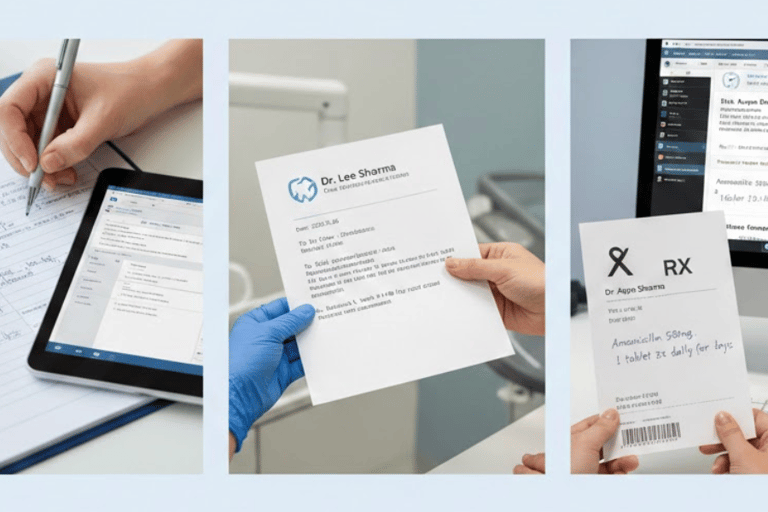
The paper focuses on three essential forms of dental documentation: clinical notes, referral notes, and prescriptions. Clinical notes ensure continuity of care and serve as legal records; referral notes facilitate coordination between providers; and prescriptions require precision to protect patient safety. Using real-world examples and peer-reviewed literature, the project highlights how clarity, audience awareness, and accuracy in these documents directly impact treatment outcomes, workflow efficiency, and trust between patients and providers.
3. Relevance to My Pre-Dental Path
This project strengthened my understanding of the non-clinical responsibilities of dentistry, particularly communication, ethics, and patient advocacy. By connecting technical writing skills to dental practice, I developed a deeper appreciation for how documentation influences care quality and patient trust. The experience reinforced my interest in dentistry as a field that requires both scientific expertise and strong communication skills, preparing me to approach future clinical environments with professionalism, precision, and empathy.